

By Amanpreet Singh
Hey, Cloggers! We traded the high peaks for the deep, dense wilderness of the Terai—the low-lying grasslands and forests bordering Nepal. Our destination: Dudhwa National Park (DNP), a critical and often overlooked gem in Uttar Pradesh, known for its unique ecosystem and incredible conservation success stories.
Dudhwa is where you encounter the raw, authentic jungle—a world away from the crowded parks. This trip was a thrilling, often silent, and deeply epic search for wildlife, filled with lovely sunrises and great fun with friends: Rahul, Simran, Vikram, and me.
Stepping into the Sal Forest (The Epic Start)
Dudhwa is characterized by its magnificent Sal forests—trees that grow tall and straight, forming a cathedral-like canopy, interspersed with vast stretches of tall, swampy grasslands (phanta). This unique environment supports a diverse range of animals, including the magnificent Bengal Tiger, Asian Elephant, and, most importantly, the Barasingha.
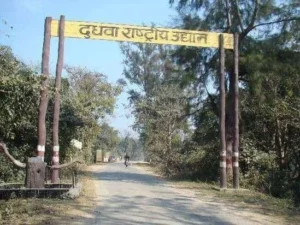
Our Epic adventure began right at the gate. Unlike the open jeeps of drier parks, our safari vehicle immediately plunged into dense undergrowth. The jungle here feels immediate, thick, and utterly alive. We were on high alert for our first major sighting.
The Barasingha’s Domain: Conservation Success
Our first major objective, and Dudhwa’s primary claim to fame, was sighting the Barasingha (Swamp Deer). This is the only place in the world where the species survives in the wild outside of Assam. We drove to the marshy areas and grasslands where they congregate.
The Beautiful Moment arrived as we saw a huge herd—dozens of male deer with their magnificent, multi-tined antlers (12-tined, hence barah singha, or 12-horned) grazing serenely in the morning mist. Their russet coats glowed in the low sun. It was a profound sight, recognizing that we were witnessing a conservation success story unfolding right before our eyes.
The Silent Hunt for the Tiger and Rhino (The Lovely Thrill)
Dudhwa offers a quieter, more patient safari experience. It’s less about guaranteed sightings and more about immersion in the environment. We spent the better part of Day 2 on silent, slow drives, looking for the apex predators.
The Lovely thrill of the jungle lies in its subtle clues: a pugmark on the road, the alarm call of a langur high in the Sal trees, or the sudden, absolute silence that indicates a predator is near. We tracked fresh tiger pugmarks for nearly an hour, feeling the tension build with every curve in the road, before the marks frustratingly vanished into the thick undergrowth. We didn’t get a clear tiger view, but the experience of the hunt was thrilling enough.
A Rendezvous with the Rhino
Dudhwa also holds a small population of one-horned Indian Rhinoceros, relocated here as part of a successful reintroduction program. We visited the designated area and, with incredible luck, spotted a mother and calf grazing near a watering hole.
The sheer size and prehistoric look of the rhino, munching contentedly in the distance, made for another Beautiful Moment. This sighting solidified Dudhwa’s reputation as a sanctuary for highly endangered species.
The fun with friends involved keeping our eyes peeled in opposite directions, inevitably leading to false alarms (a spotted deer often became a tiger for a split second) and bursts of whispered laughter in the otherwise silent jeep.
The Unique Terai Experience
Beyond the big animals, Dudhwa’s ecology is unique. We took time to explore the river banks and the periphery of the forests.
We visited the Kishanpur Wildlife Sanctuary, a satellite park of DNP, which offered quieter routes and stunning birdwatching opportunities, spotting everything from the Great Hornbill to various species of kingfisher.
The Lovely end to each day was the stillness of the jungle night. We stayed in a forest rest house deep inside the park. The evening soundtrack was the constant chirping of crickets, the occasional distant roar of a tiger, and the eerie calls of the nightjars. Sharing stories around a bonfire, miles from any town, felt primal and deeply connecting.
Dudhwa National Park is an extraordinary travel destination for those who cherish authentic wilderness and conservation history. It’s an adventure that demands respect for nature but rewards you with unparalleled sights of India’s most precious and unique wildlife.
What’s the most unique animal you’ve ever spotted in the wild? Share your sighting below!
Stay wild, Amanpreet Singh clogtheblog.com

